
Losing a family member is never easy. In those emotional moments, paperwork is the last thing we want to deal with. But since PAN and Aadhaar play such a big role in identity and financial matters, it’s important to cancel or surrender them after a loved one’s passing to prevent any misuse.
That said, don’t rush. Take your time to grieve and then handle these formalities one step at a time. Taking care of them early can help avoid future legal, financial, or identity-related issues.
Is it Mandatory to Cancel or Surrender PAN & Aadhaar After Death?
Legally, it is not mandatory to cancel or surrender both PAN and Aadhaar after the death of a family member, there is no deadline prescribed for surrendering PAN or deactivating Aadhaar and also there is no penalty for not doing so.
However, from a practical and safety perspective, it is always advisable to take appropriate action to prevent identity misuse, fraud, or future complications.
- They can be misused for money laundering activities.
- They may be used to open shell companies or fake entities.
- They can enable unauthorized or illegal financial transactions.
Fraudsters often target the identities of deceased people because their records may remain active in official systems for a long time after death. This can create an opening for misuse in illegal financial or identity-related activities.
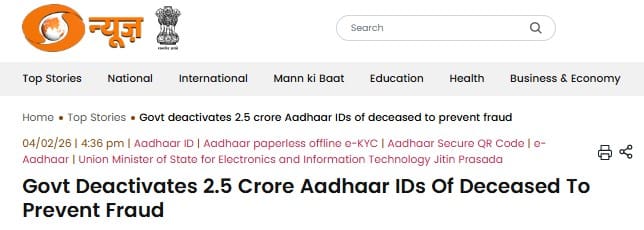
In February 2026, the Union Minister of State for Electronics and IT, Jitin Prasada, informed the Lok Sabha that the UIDAI had deactivated over 2.5 crore Aadhaar numbers of deceased persons.
Do We Need to Immediately Cancel or Deactivate PAN & Aadhaar After Death?
Don’t delay it indefinitely, but at the same time, don’t feel pressured to act immediately. A balanced approach works best — handle these formalities calmly and systematically, at a pace that feels manageable for you and your family.
It’s advisable to take up PAN surrender and Aadhaar deactivation at a stage when things are a bit more settled:
- After obtaining the death certificate
- The death certificate is the most important document required for almost all formalities. Once you have multiple copies of it, you’ll be in a better position to initiate requests smoothly.
- Once immediate responsibilities are taken care of
- Focus first on essential responsibilities such as funeral arrangements, rituals, and supporting your family emotionally. These moments matter more, and paperwork can follow shortly after.
- Along with other financial and legal tasks – Cancelling or deactivating them too early may create unnecessary hurdles or delays in completing these below processes.
- Do not surrender PAN or deactivate Aadhaar of the deceased family member before completing key financial and legal formalities.
- Closing or transferring bank accounts
- Filing insurance claims
- Updating or claiming through nominee details
- Reviewing and transferring investments and financial assets
- Filing the income tax return of the deceased (as a legal heir)
- Claiming any pending tax refunds
- Processing provident fund (PF) and other retiral benefits, if applicable
- Executing the Will and completing property or estate settlement, if any
How to Get Aadhaar Deactivated and PAN Card Surrendered?
Once you have completed all essential financial and legal formalities, you can proceed with closing these identity records.
Step-by-Step: Aadhaar Deactivation (Deceased Person)
Step 1: Lock the biometrics first
As a first step, the legal heir should lock the deceased person’s biometrics to prevent any misuse. This can be done through the Aadhaar portal or the mobile app, provided you have access to your family member’s registered mobile number. . Once locked, the fingerprints and iris details cannot be used for authentication. This works as a temporary safety measure until the deactivation process is completed.
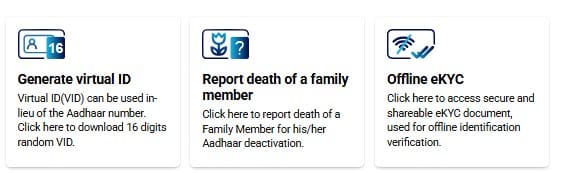
Step 2: Use the “Reporting of Death of a Family Member” service
UIDAI now offers a dedicated online service, “Reporting of Death of a Family Member” on the myAadhaar portal.
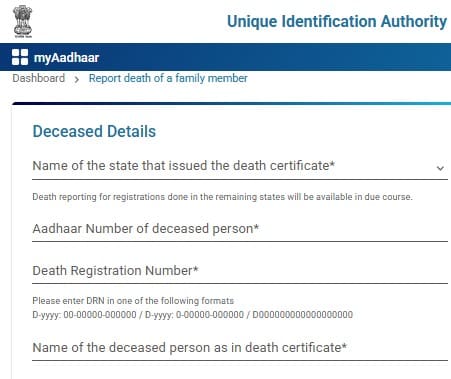
The legal heir can log in and verify their identity, then enter the deceased person’s Aadhaar number and death registration number. The details are checked against the Civil Registration System (CRS) before further action is taken.
Step 3: Aadhaar gets deactivated
Once the details are verified, the Aadhaar status changes to “Deactivated due to death”. This ensures it cannot be used for any future transactions or authentication.
Alternative: Offline Aadhaar Deactivation
If the online process isn’t possible, you can go offline. Visit your nearest Aadhaar Seva Kendra with the deceased person’s Aadhaar number, a copy of the death certificate, proof of your relationship (if needed), and your own ID. Submit the request there — the authorities will verify everything, and once approved, the Aadhaar will be officially deactivated.
Step-by-Step: PAN Card Surrender (Deceased Person)
The core process of surrendering PAN in case of death is primarily offline. However, certain related activities (like legal heir registration and ITR filing) are now streamlined online.
Step 1: Register as Legal Heir (if needed)
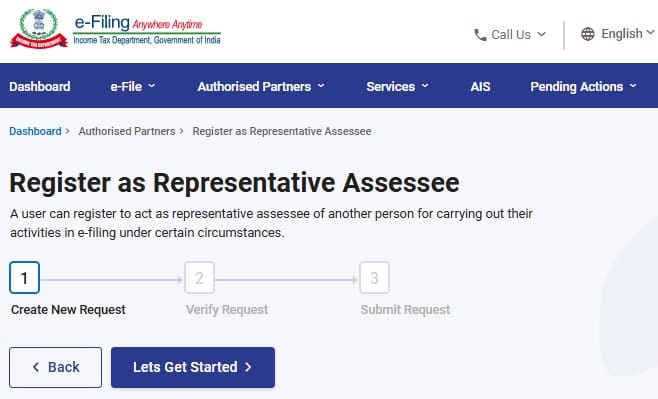
Before surrendering the PAN, the legal heir may need to handle any pending tax matters. Log into the Income Tax e-filing portal with your own credentials, go to Authorized Partners → Register as Representative Assessee, and select “Deceased (Legal Heir)”. Once approved, you can file any pending ITRs and manage tax matters legally for the deceased.
Step 2: Draft a Request Letter for PAN Surrender
Write a simple letter addressed to the respective Assessing Officer (Income Tax Department) including:
- Name of the deceased
- PAN number
- Date of death
- Reason for request (death)
How to Find the Assessing Officer (AO) for the Deceased’s PAN

Income Tax e-Filing Portal
Use the "Know Your AO" service — enter the deceased’s PAN and verify with OTP on your mobile. It shows the AO code, jurisdiction, and sometimes contact details.

Check Old Tax Records
Look at previous ITR-V acknowledgments or any Income Tax notices received — they usually mention the AO details or jurisdiction.

Visit Local Tax Office
Go to your nearest Income Tax office with the PAN and death details — the staff can help identify the correct AO.
Step 3: Attach the required documents
Include a copy of the death certificate, the deceased person’s PAN card (if available), and ID proof of the legal heir or applicant.
Step 4: Submit your request
Send the documents to your local Income Tax Office, or raise a grievance through the Income Tax e-filing portal. The department will process it and deactivate/surrender the PAN in their records.
Why Taking This Step Matters
As mentioned earlier – A “live” PAN stays active in the system and becomes an easy target for fraudsters. They could use it for big transactions, money laundering, or even opening fake company accounts. Worse, you might get tax notices in the deceased’s name, forcing you to prove they’re no longer around and didn’t make those transactions. Locking this down early saves you that stress.
Surrendering the PAN tells the government this tax identity is done. Once the Assessing Officer approves, it’s marked “Deactivated/Inactive,” stopping future tax demands, compliance notices, or confusing alerts. It’s a clean closure that lets you focus on healing, not paperwork surprises.
If you found this guide helpful, consider sharing it with someone who might need it.
Continue reading:
- New PAN Rules from April 2026: Limits & Impact
- 6 Banking Rules Every Bank Customer Should Know in 2026
- Who gets the Joint Bank Account Monies if one Account Holder dies?
(Post first published on : 29-March-2026)
Join our channels