
We’re always told: think positive, dream big, believe in yourself, and stay optimistic about the future. And honestly, that’s great advice for most parts of life. But when it comes to money, a small dose of “negative thinking” can actually work in your favour.
I’m not talking about being pessimistic, or living in fear, or assuming everything will go wrong. I’m talking about asking just one simple question: “What if something goes wrong?” That one question can push you to make some of the smartest financial decisions you’ll ever make.
The Positive Power of Negative Thinking
| Negative thought | Positive financial action |
|---|---|
| “My money never seems to last till the end of the month.” | → Make a budget |
| “I could lose my job someday.” | → Build an emergency fund |
| “The stock market can crash.” | → Diversify appropriately |
| “This investment could lose money.” | → Understand the risk before investing |
| “I may live longer than I expect.” | → Plan for retirement |
| “Something could happen to me.” | → Review insurance protection |
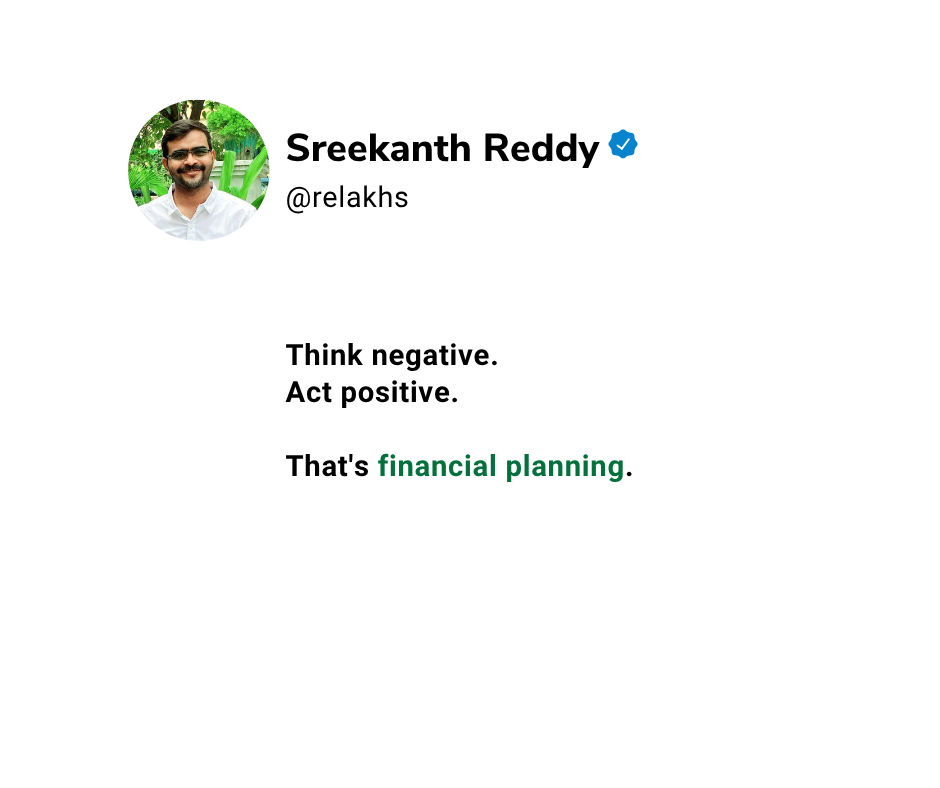
Notice the pattern? The thought is negative. The action is positive.
We don’t dwell on these possibilities because we expect them to happen. We think about them simply because they could happen. And that small dose of financial pessimism can be exactly what pushes us to make smarter, safer decisions today. That’s the positive power of negative thinking in personal finance.
A Little Negative Thinking Can Be Financially Positive
- “Paisa kabhi nahi bachta.” – That thought can make you look at where your money is going, create a budget and start saving systematically.
- “Stock crash ho sakta hai.” – That thought can remind you not to put all your money into one stock, sector or asset class.
- “Loss ho sakta hai.” – That thought encourages you to understand the downside before chasing returns.
- “Income ruk sakti hai.” – That thought reminds you why an emergency fund matters.
- “Pata nahi life kitni long hogi.” – That thought can push you to plan for a retirement that could last 25–30 years or even longer.
None of these thoughts are predictions. They are simply possibilities we should be prepared for.
Negative Thinking Vs Pessimism
There’s an important difference between negative thinking and being negative.
Being negative sounds like: “Everything will go wrong.” Financially sensible negative thinking sounds like: “Things could go wrong. Am I prepared if they do?”
That’s a completely different mindset.
You don’t need to believe that the stock market will crash tomorrow. But you should accept that market crashes are possible.
You don’t need to expect that you will lose your job. But you should recognise that your income can be disrupted.
You don’t need to assume that you will have a medical emergency. But you should understand that healthcare expenses can be financially devastating without adequate protection. You don’t need to expect the worst. You simply need to be prepared for it.
Why Risk-Aware Investors Sleep Better
Money isn’t only about returns. It’s also about peace of mind.
- Someone with a diversified portfolio is better prepared to handle market volatility.
- Someone with an emergency fund can manage a temporary income disruption without panic.
- Someone with adequate insurance is better protected against large, unexpected expenses.
- Someone with a realistic retirement plan can feel more confident about the future.
The goal isn’t to eliminate every financial risk. That’s impossible. The goal is to make sure that one bad event doesn’t permanently damage your financial life.
Think Negative, But Act Positive
There’s one important caveat. Don’t let negative thinking turn into fear-based financial decision-making.
- If you constantly expect a market crash, you may never invest.
- If you constantly worry about losing your job, you may become excessively conservative.
- If you constantly fear losing money, you may keep everything in low-risk assets and allow inflation to quietly erode your purchasing power
That’s not the objective. The objective is balanced thinking. Be optimistic enough to invest for your future. Be realistic enough to prepare for uncertainty. Hope for the best. Prepare for the unexpected.
Think about what could go wrong. Then take sensible steps to protect yourself. Hope for the best. Prepare for the unexpected.
Final Thoughts
Personal finance isn’t about predicting the future. It’s about being prepared for what could go wrong.
Ask yourself:
“If something goes wrong, will I be financially prepared?”
That one question can change how you save, invest, insure and plan. A little negative thinking can lead to positive financial action.
Continue reading:
- My 6 Core Personal Financial Planning principles!
- 5 Personal Financial Mistakes that I have committed…!
- The ETERNAL Financial Planning Framework: A Practical Approach to Building Long-Term Wealth
(Post first published on: 24-August-2026)
Join our channels